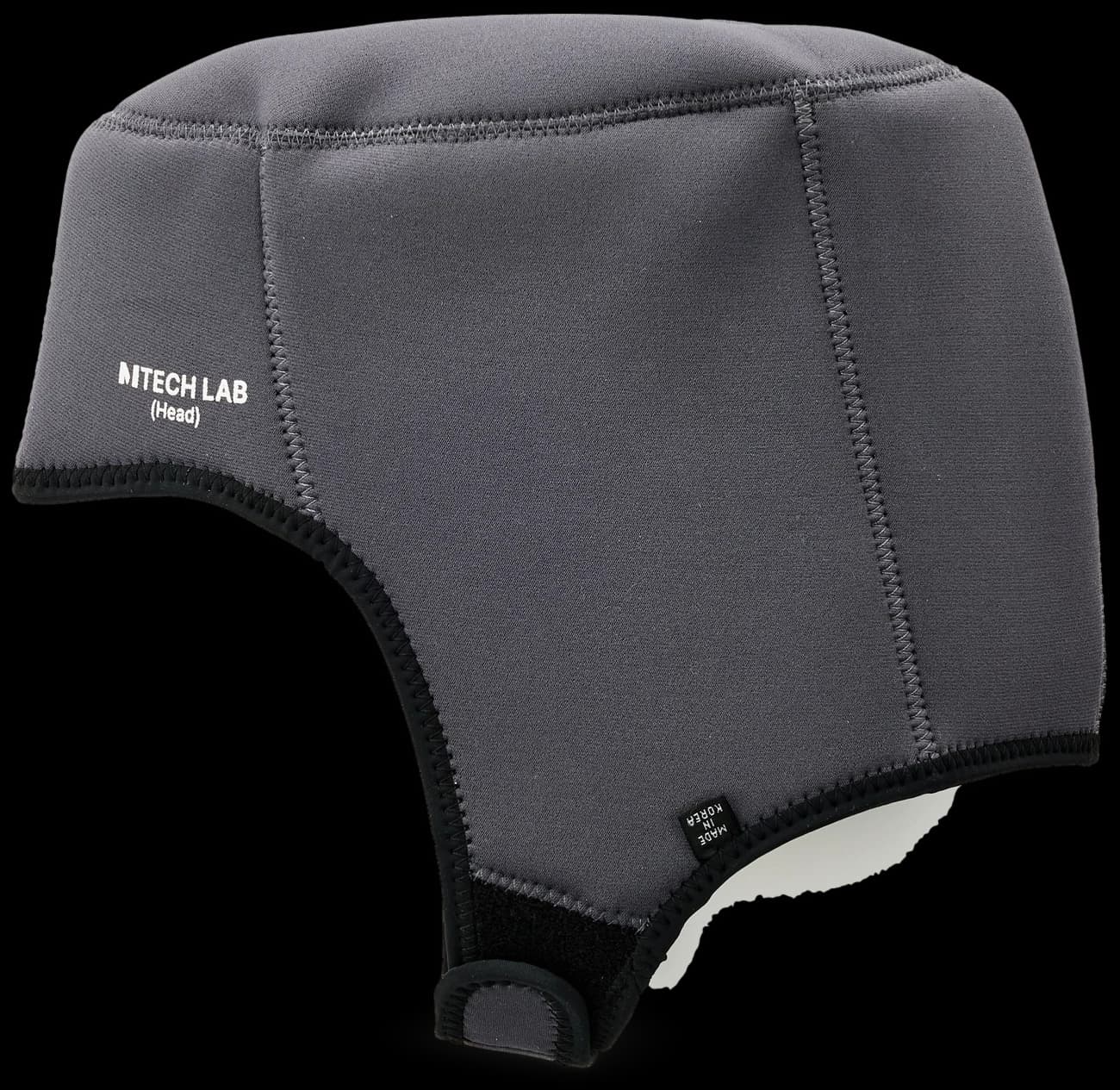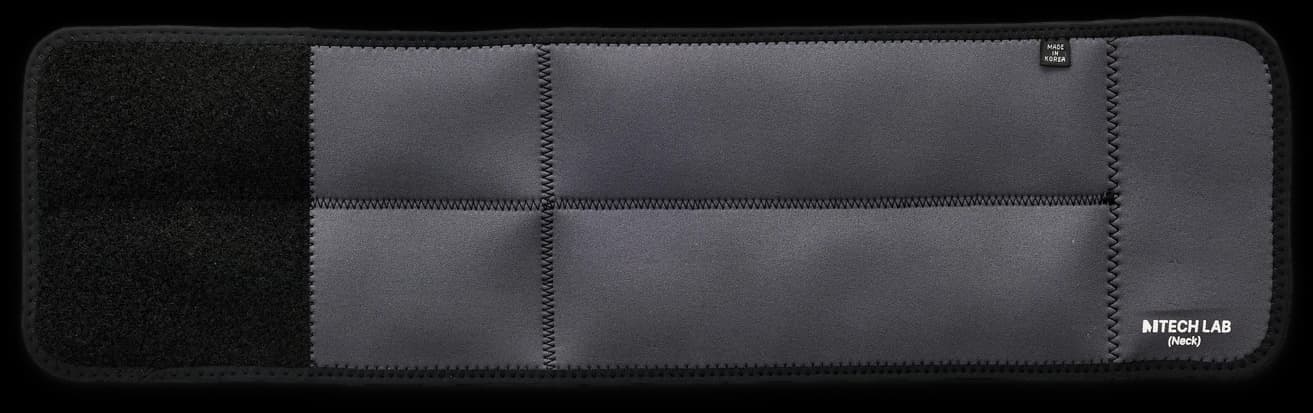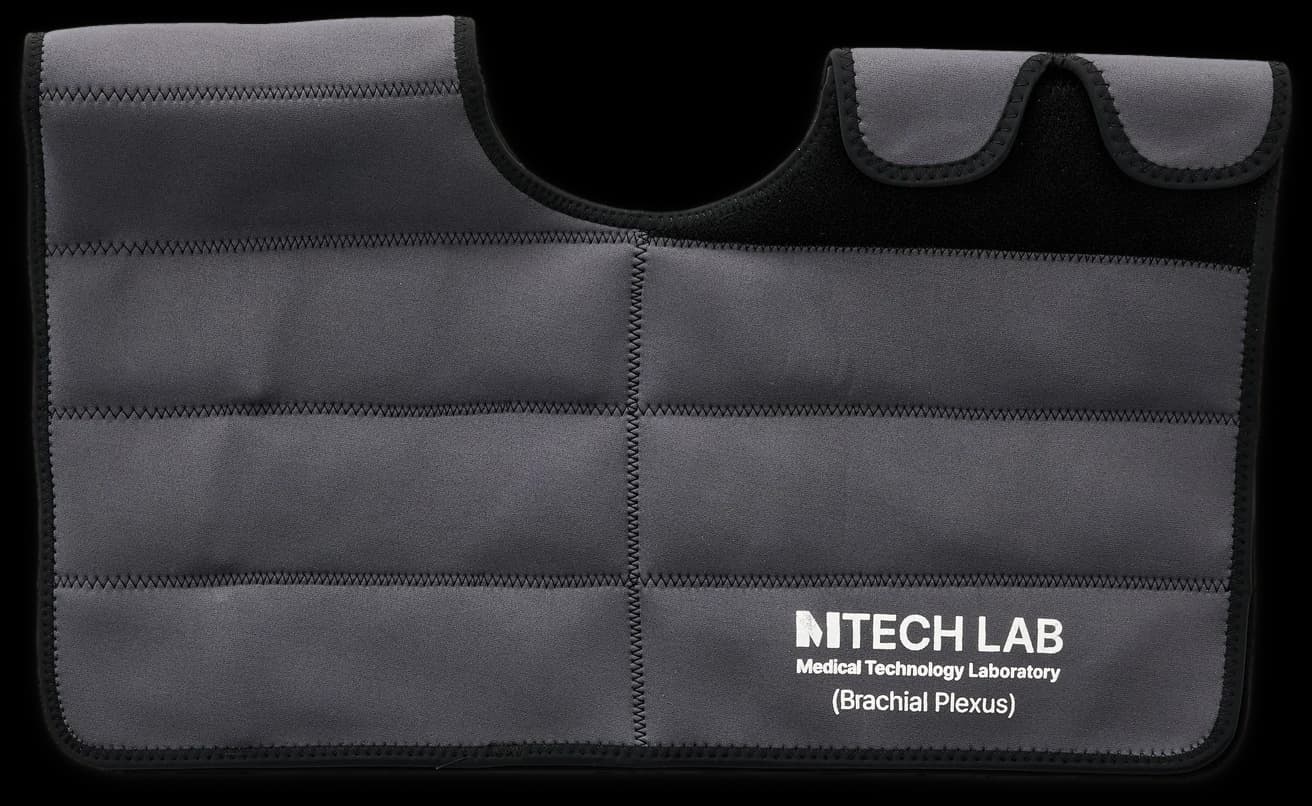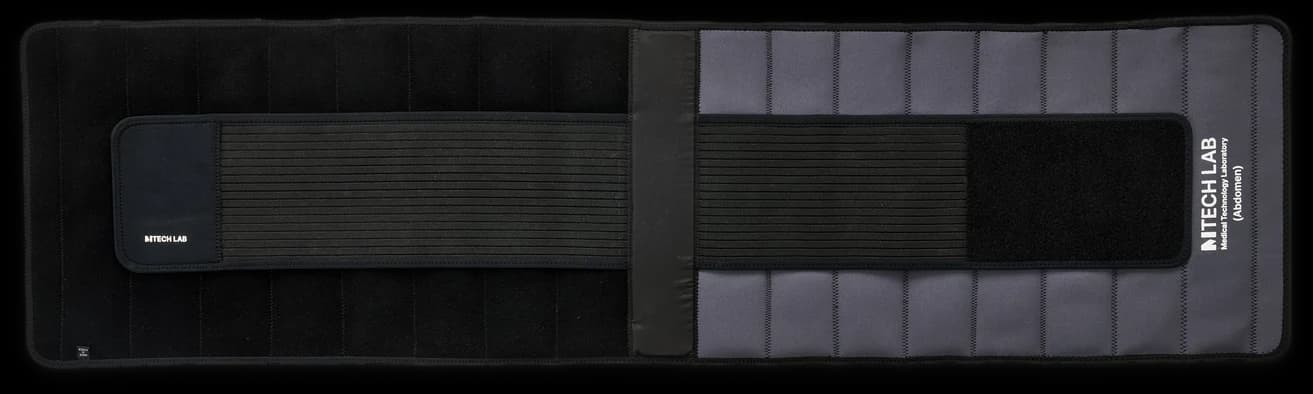
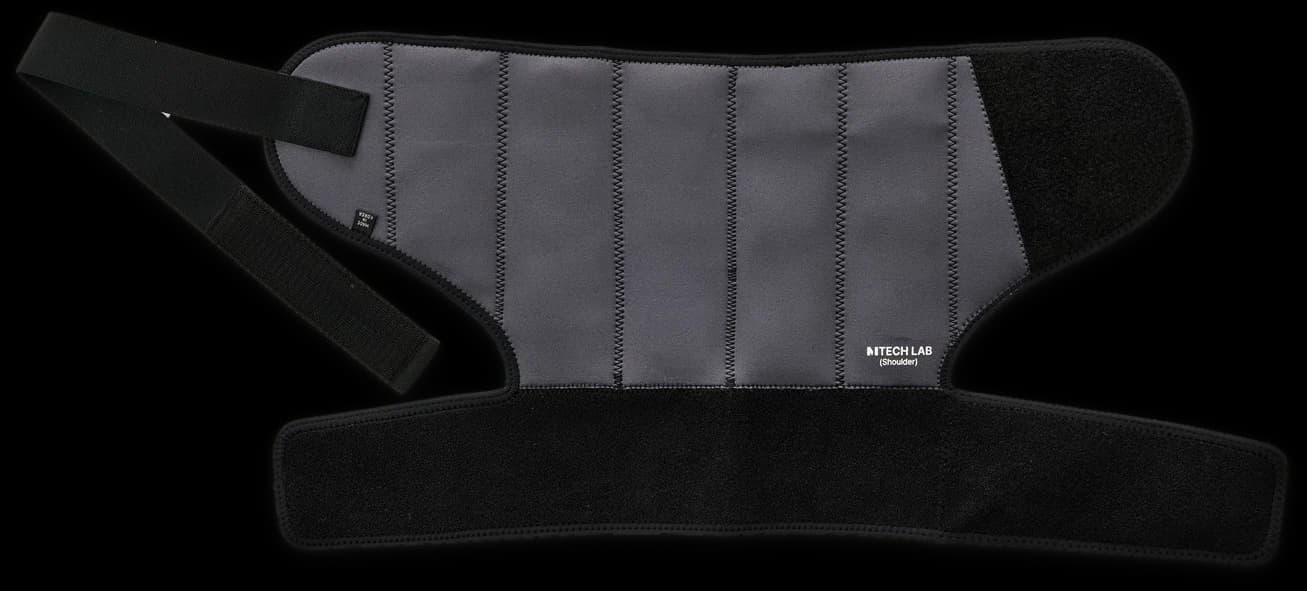
Anatomy pad
Shoulder Pad · MTL-A-S1
Shaped for one region, so its inserts sit where that anatomy needs them.
A wearable high-permittivity pad for shoulder MRI, intended to improve B₁ field homogeneity within the RF coil. Supplied as a set with three auxiliary pads and an aluminium carrying case.
Operating principle
At high field strengths the RF wavelength in tissue shortens, and interference and attenuation leave parts of the anatomy with a weaker B₁⁺ field. The pad’s barium-titanate-based medium interacts passively with the RF field and redistributes it locally, toward the anatomy the pad covers. It needs no power, no cables and no change to the scan protocol.
Image comparison
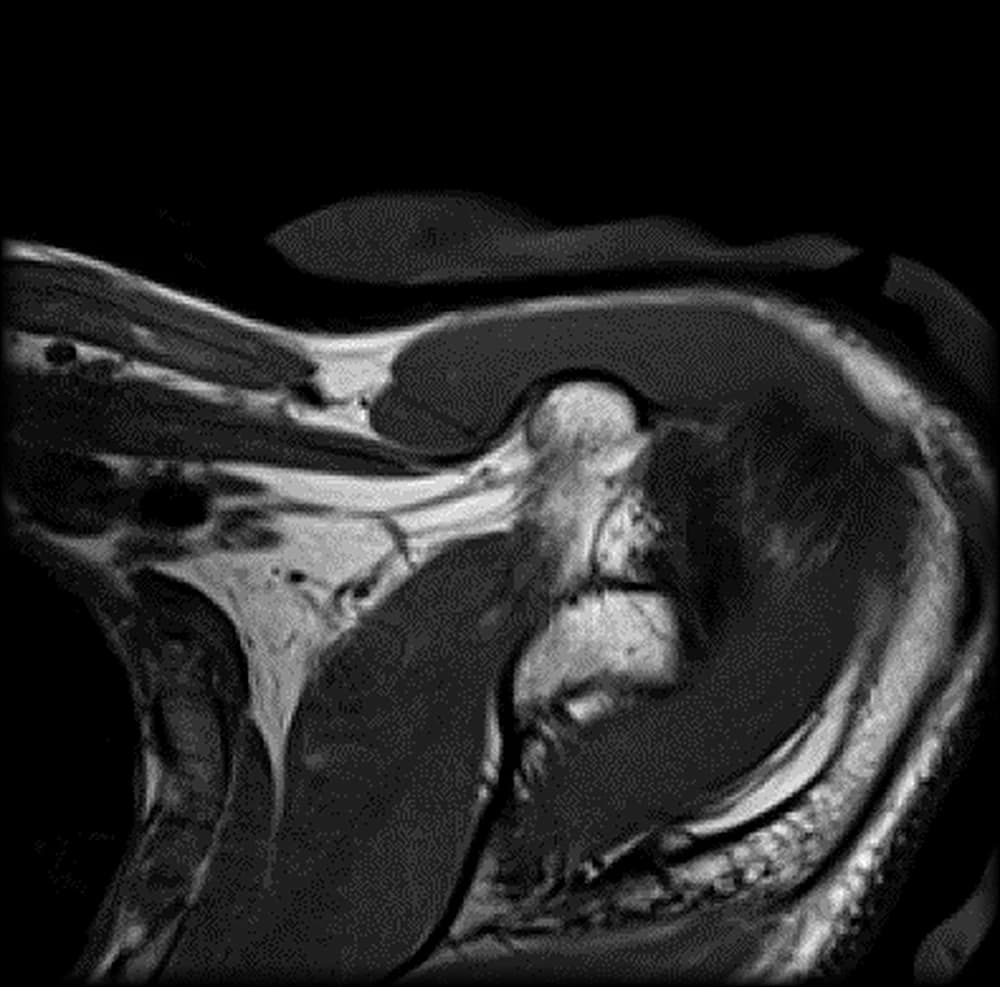
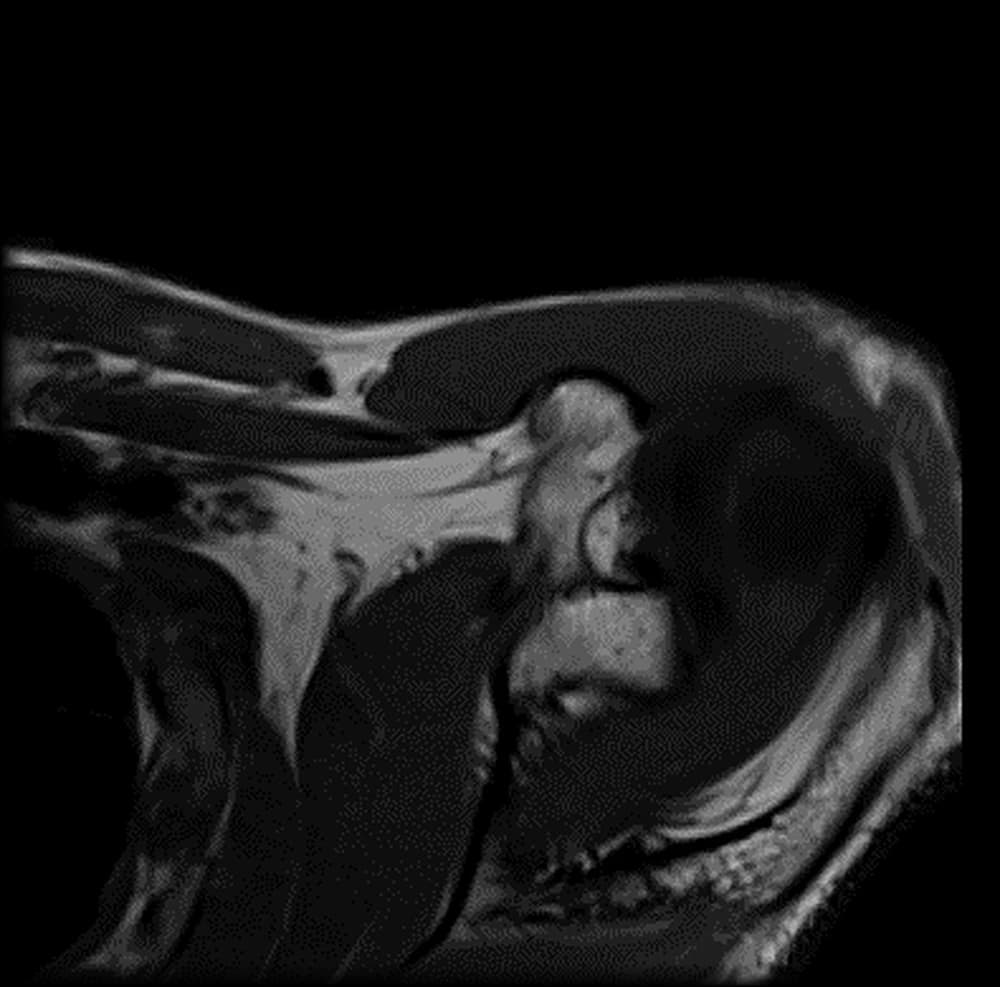 Without pad
Left of the divider: without the pad. Right: with the pad. Drag the divider to compare.
Set contents
A high-permittivity pad acts locally, on the anatomy it lies against, so it has to fit closely. Because anatomy differs from patient to patient, every pad is supplied as a set: the anatomy pad, three auxiliary pads that close gaps and extend coverage, and an aluminium carrying case.
Shoulder Pad · MTL-A-S1
Shaped for one region, so its inserts sit where that anatomy needs them.
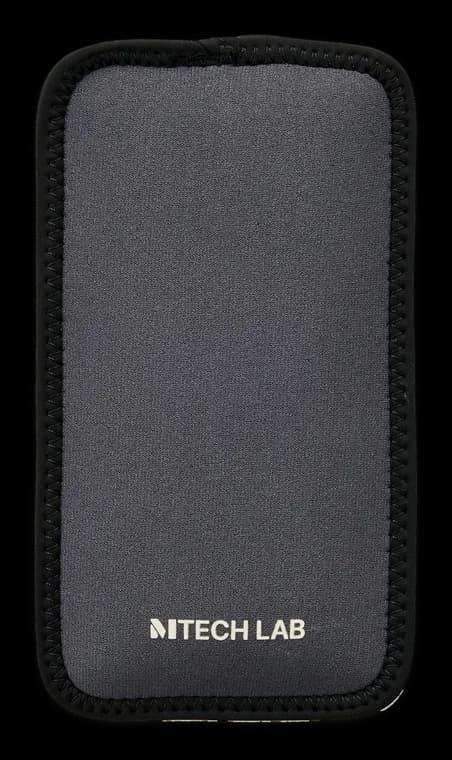
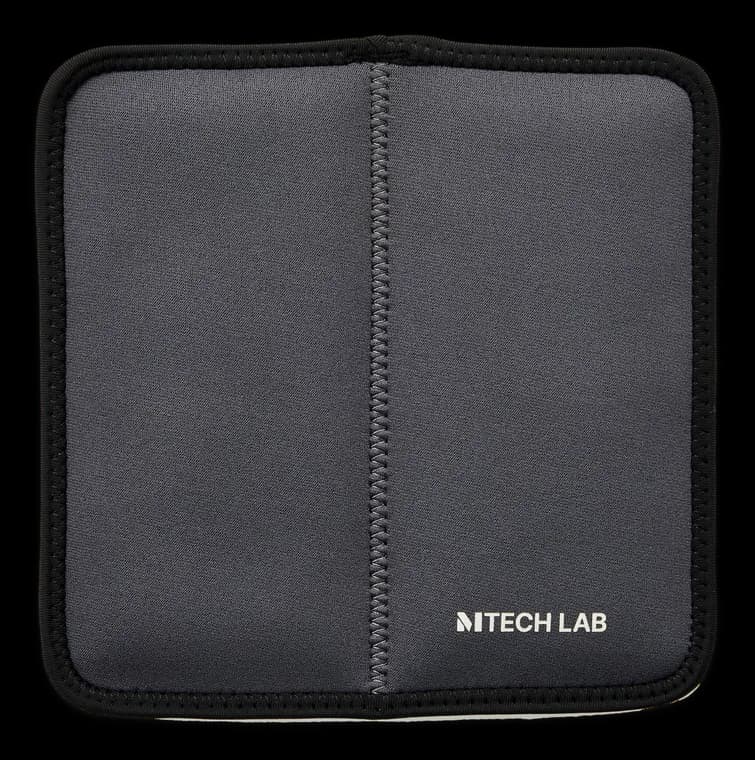
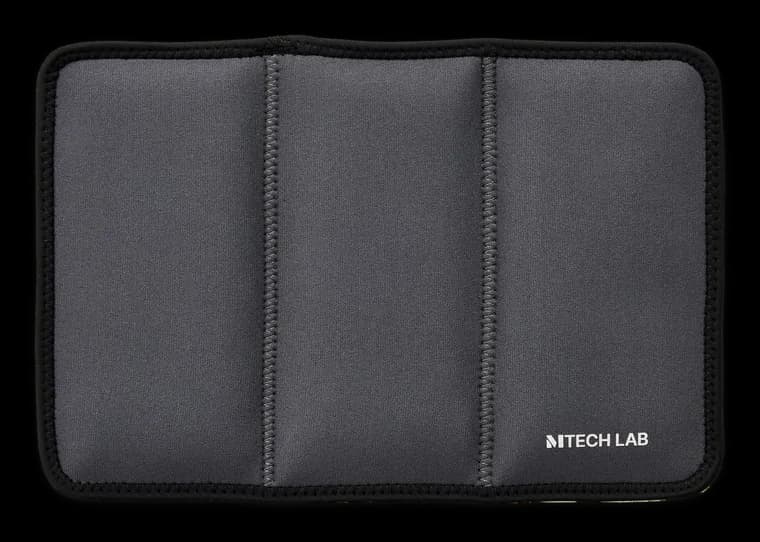
MTL-A-G1, G2 and G3
Flat pads with the same high-permittivity inserts and CDP airprene cover, in three widths.
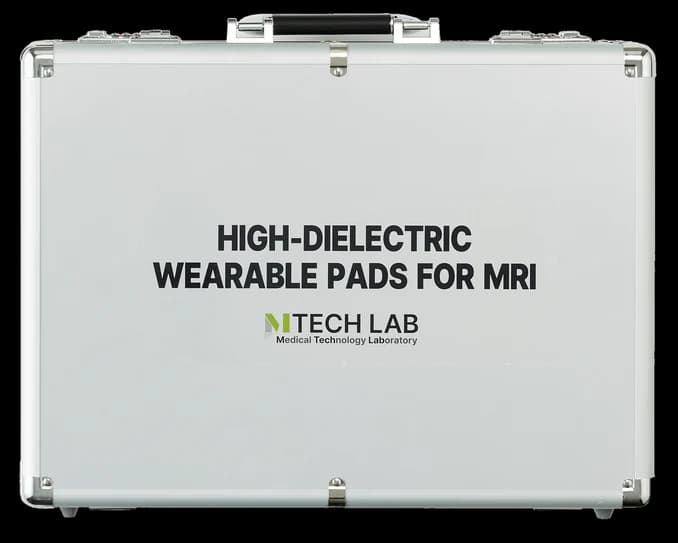
The set is supplied in a hard aluminium case with a carrying handle, marked with the product name and the MTechLab logo.
| Model | Sections | Size W × D × T | Weight | Insert |
|---|---|---|---|---|
| MTL-A-G1 | 1 | 96 × 176 × 8 mm | 210 g | 80 × 160 × 3 mm |
| MTL-A-G2 | 2 | 183 × 176 × 8 mm | 420 g | 160 × 160 × 3 mm |
| MTL-A-G3 | 3 | 270 × 176 × 8 mm | 630 g | 240 × 160 × 3 mm |
Fitting
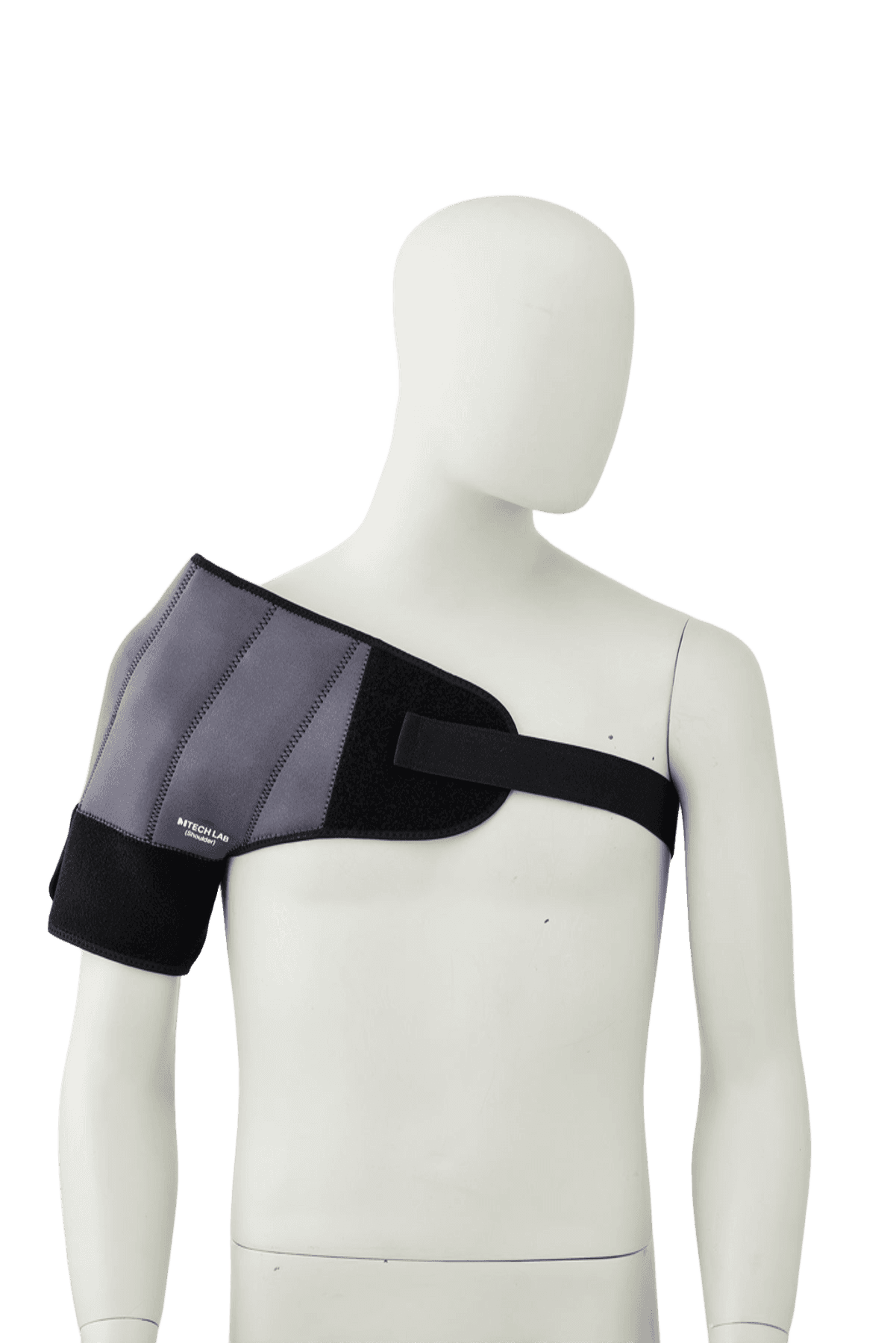
Sits over one shoulder and is held by a fixation band. Two widths, 575 and 620 mm, follow the shoulder.
Before use Check the cover, inserts and closure; do not use a damaged pad. Make sure the pad suits the region to be scanned.
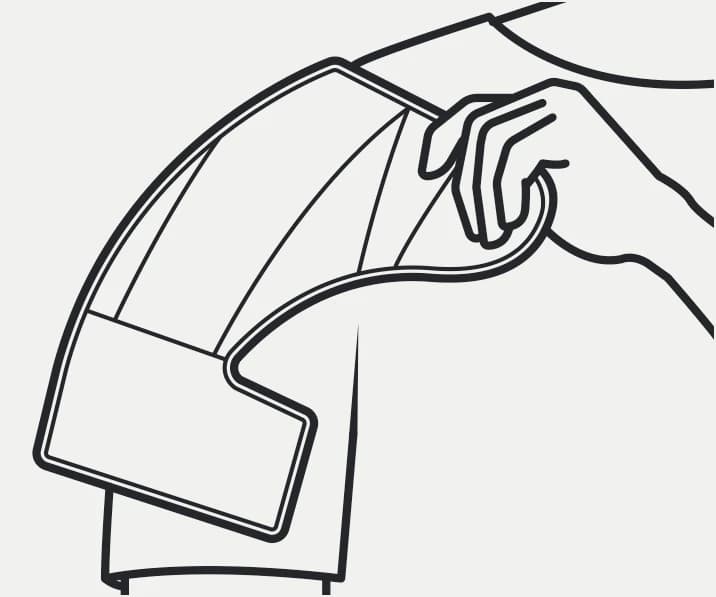
Step 1: Place the pad on the shoulder to be scanned.
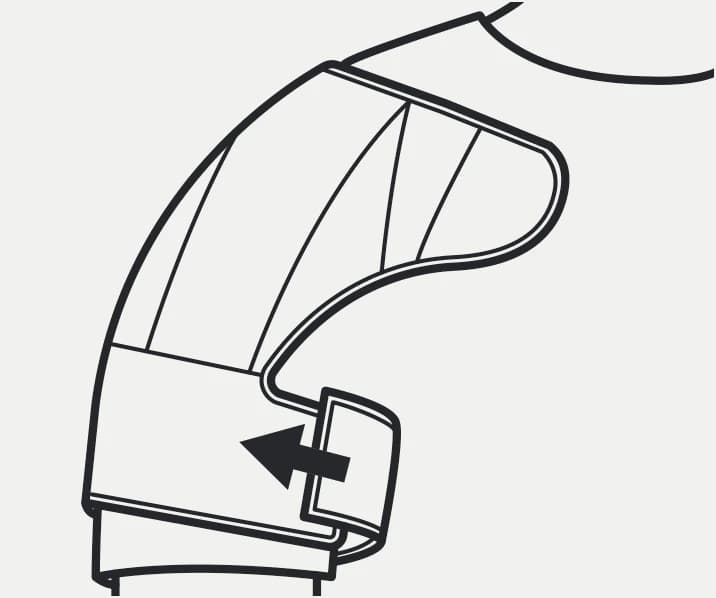
Step 2: Close the hook-and-loop round the upper arm.
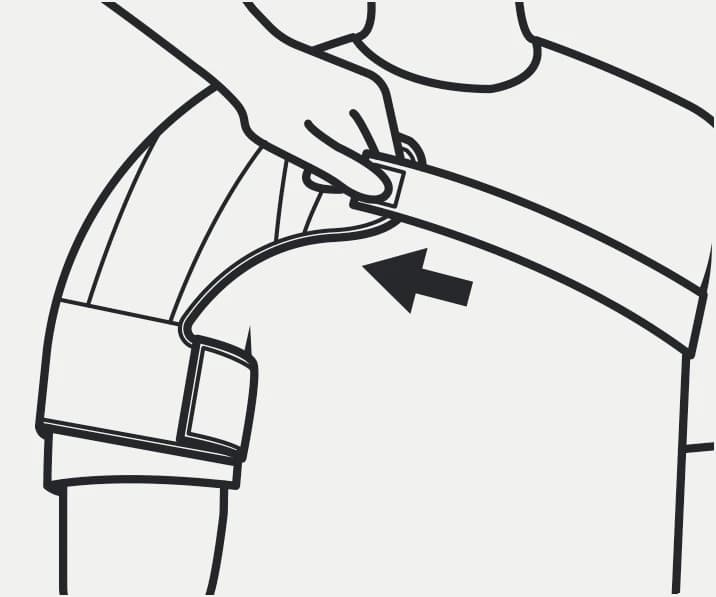
Step 3: Take the strap under the opposite armpit, pull it snug and fasten it.
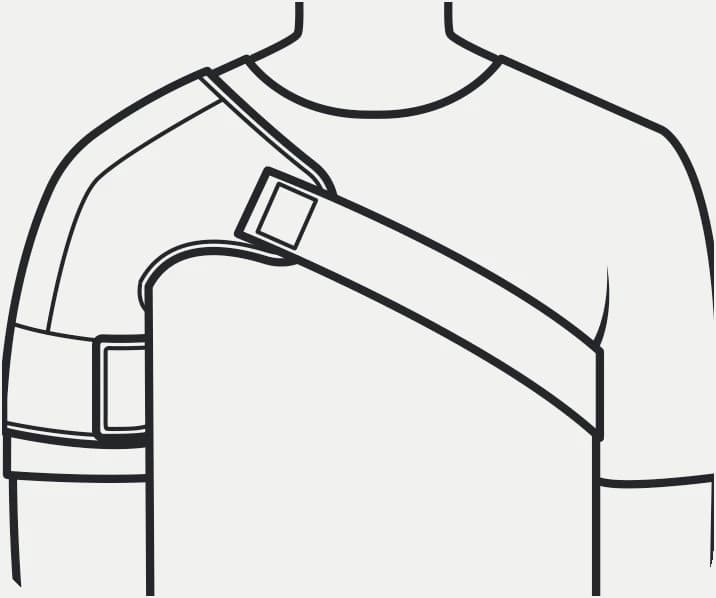
Step 4: Check that the pad sits close with no gaps.
Then position the patient in the RF coil and scan with your existing protocol. The pad works passively and needs no change to sequence parameters. Before the first examination, check outside the scanner that the anatomy fits inside the RF coil with every pad to be used. Each auxiliary pad is 8 mm thick.
Construction
High-permittivity inserts improve B₁ field homogeneity over the shoulder joint
Six inserts over the shoulder joint
Fixation band holds the pad over the joint
Two widths, 575 and 620 mm, follow the shoulder
Specifications
Dimensions and weight are nominal values. Dielectric properties are those of the insert medium.
Questions
The range
Evaluation
Tell us your MRI system, field strength and target anatomy. We will recommend a set and arrange an evaluation.